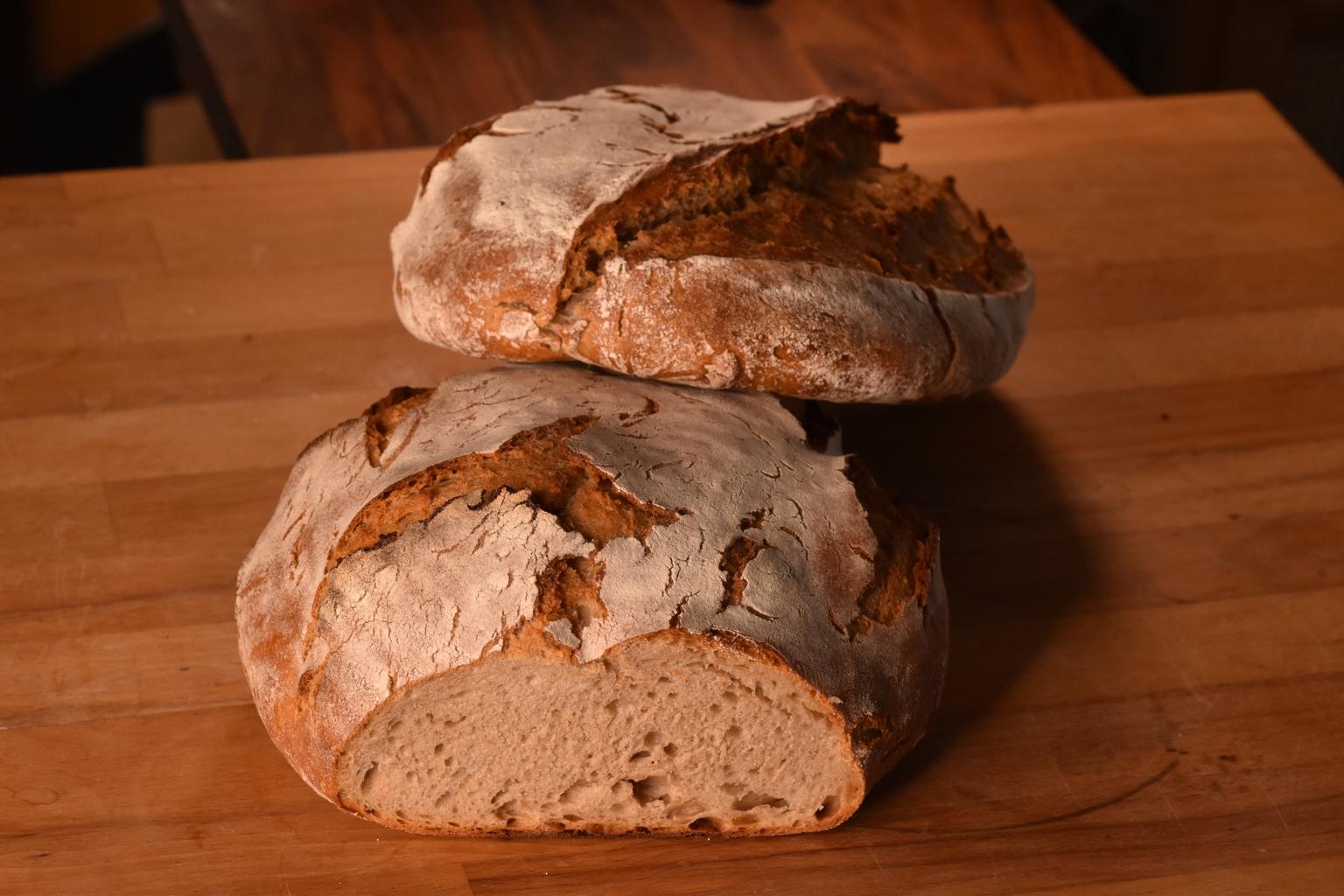
Its time to level up my bread game with some new recipes and new techniques.
For this bread I tried a variety of new techniques and steps. One thing to note up front: this is not a beginner friendly bread. It is time consuming, has more steps and is a pain to shape due to the high rye flour content.
The most important learnings for me were how to shape rye bread properly and to realize that there is a lot of potential in varying baking methogs.
Ingredients (v2)
Starter Dough:
- 400g rye flour (type 960)
- 450g water
- v1 80 sourdough starter 8h
- v2 45g starter 12h
- 8g salt
Scald:
- 50g bread crumb or ground old bread
- 150g boiling water
- 12g salt
Main Douhgh:
- starter dough
- scald
- 240g rye flour
- 360g spelt flour
- 180g water
- 60g greek yoghurt
In this version I increased the spelt flour and reduced rye by a bit. Instead of buttermilk I used greek yoghurt as I did not have any in stock.
Instructions
Mix the starter dough together, cover it with a wet kitchen towel and let it rest for 6 (?) hours in a warm environment.
For the scald, mix everything together and let it rest at least half an hour bevore you aim to start with the main dough. It must cool down to under 40 degrees or the heat will kill the yeast.
For the main dough, mix everything together and let it rest for 30 minutes. After that shape the bread and let it proof in a proofing basket for an hour.
Note: shaping is a pain due to the high rye flour content. I tried my normal method and failed. I then floured the surface and it worked better for the most part. Only issue was that I integrated quite a bit of flour into the loaf. If you are too agressive with that you will integrate flour pockets into the loaf. Be aware of that!
The key to proper shaping was to dust the bench scraper, not the surface. This was the key for proper shaping without introducing pockets of flour!
Bake it in the dutch oven (well preheated to 250 degrees) for 10 minutes, then reduce the heat to 200. After 20 more minutes (30 total baking) uncover the dutch oven and let the loaf bake for another 5 minutes. The difference to my typical 20/20 ratio of covered/uncovered baking lies in the crust. Which is thicker, though not necessary darker.
In my first try I accidentially reduced the temperature from max (270) to 250 instead of 200 degrees. I removed the loaf after 30 minutes in the oven as it did start smelling burnt. The underside had to be cut off as it was way to dark, the rest was fine. Not something you should try but usefull information as it shows that there is a lot of wiggle room for the actual baking methods.
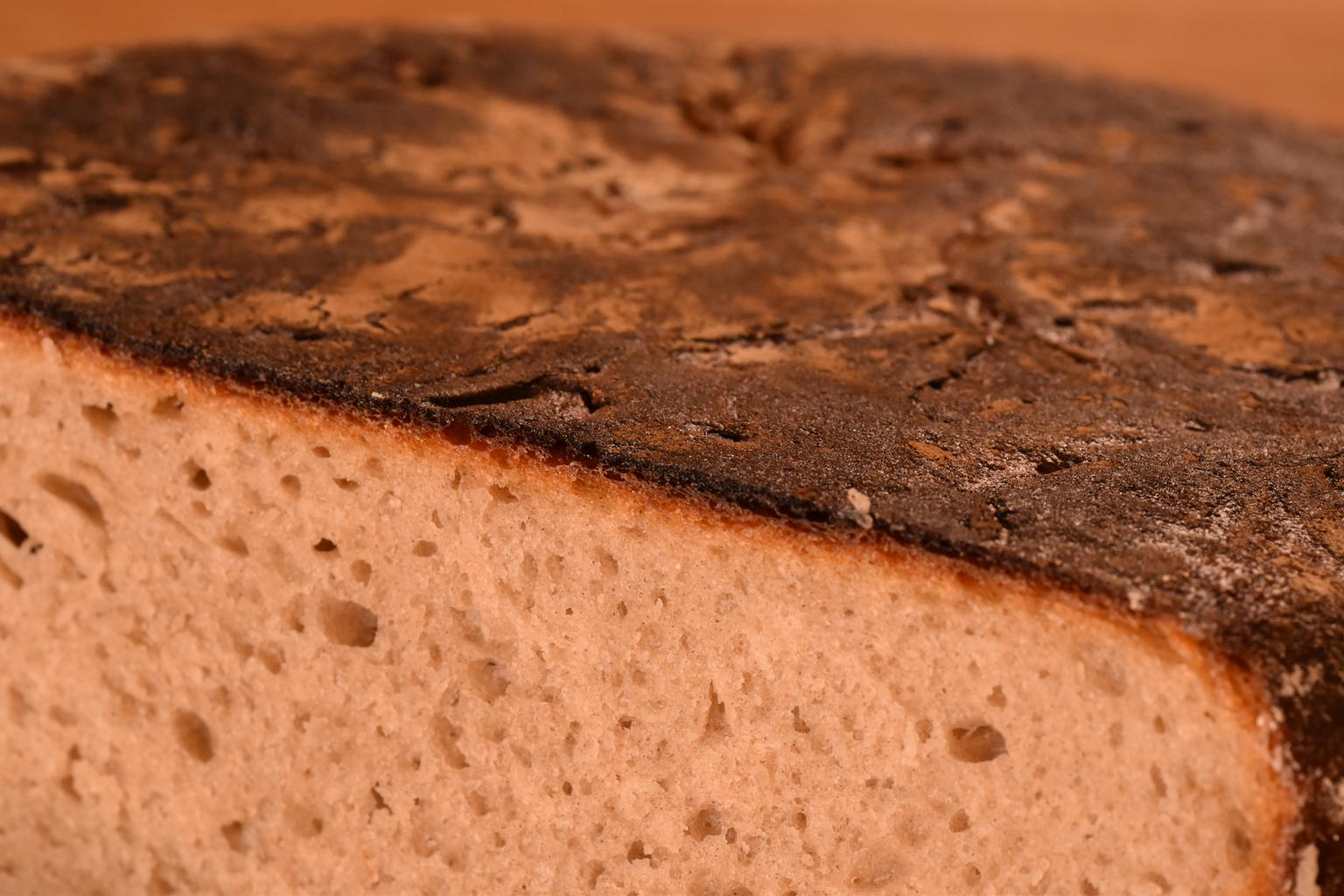
Let it fully cool down before cutting into it.
Versions
v1
Starter Dough:
- 400g rye flour (type 960)
- 450g water
- v1 80 sourdough starter
- 8g salt
- 8h rest time
Scald:
- 50g bread crumb or ground old bread
- 150g boiling water
- 12g salt
Main Dough:
- starter dough
- scald
- 240g spelt flour
- 360g rye flour
- 180g water
- 60g buttermilk
Notes: try to reduce starter and increase rest. use more spelt flour in the main dough next time.